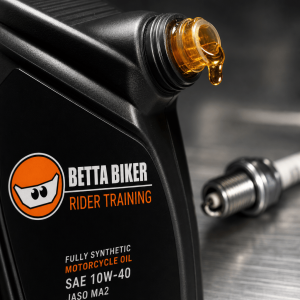
Most riders know they need to change their oil, but far fewer know why it breaks down, or what they’re even looking at when they pick a grade off the shelf. Getting this wrong doesn’t just cost you money. It costs you engine life.
Motorcycle oils come in three main types: mineral (basic, refined crude oil, fine for older or low-mileage bikes), semi-synthetic (a blend that offers better performance across temperature ranges), and fully synthetic (engineered for maximum protection, consistency, and longevity). The grade on the bottle, like 10W-40, tells you how the oil flows in cold starts versus when the engine is up to temperature. A thicker oil won’t protect a cold engine on a winter morning the same way a thinner one will, and running the wrong grade for your bike’s spec is one of those small habits that quietly causes big damage over time. Regular changes matter because oil doesn’t just lubricate. It carries away heat, keeps internal components clean, and stops metal-on-metal wear. Once it degrades, it stops doing all three. 🔧
Whether you’re brand new to bikes or just getting back into riding, understanding your machine from the ground up makes you a sharper, safer rider. That’s something we’re pretty passionate about here at Betta Biker. What’s one thing about motorcycle maintenance you wish someone had explained to you earlier? Drop it in the comments, and if you’re thinking about starting your CBT or going for your full licence, we’re based in Warrington and cover the whole North West. 🏍️