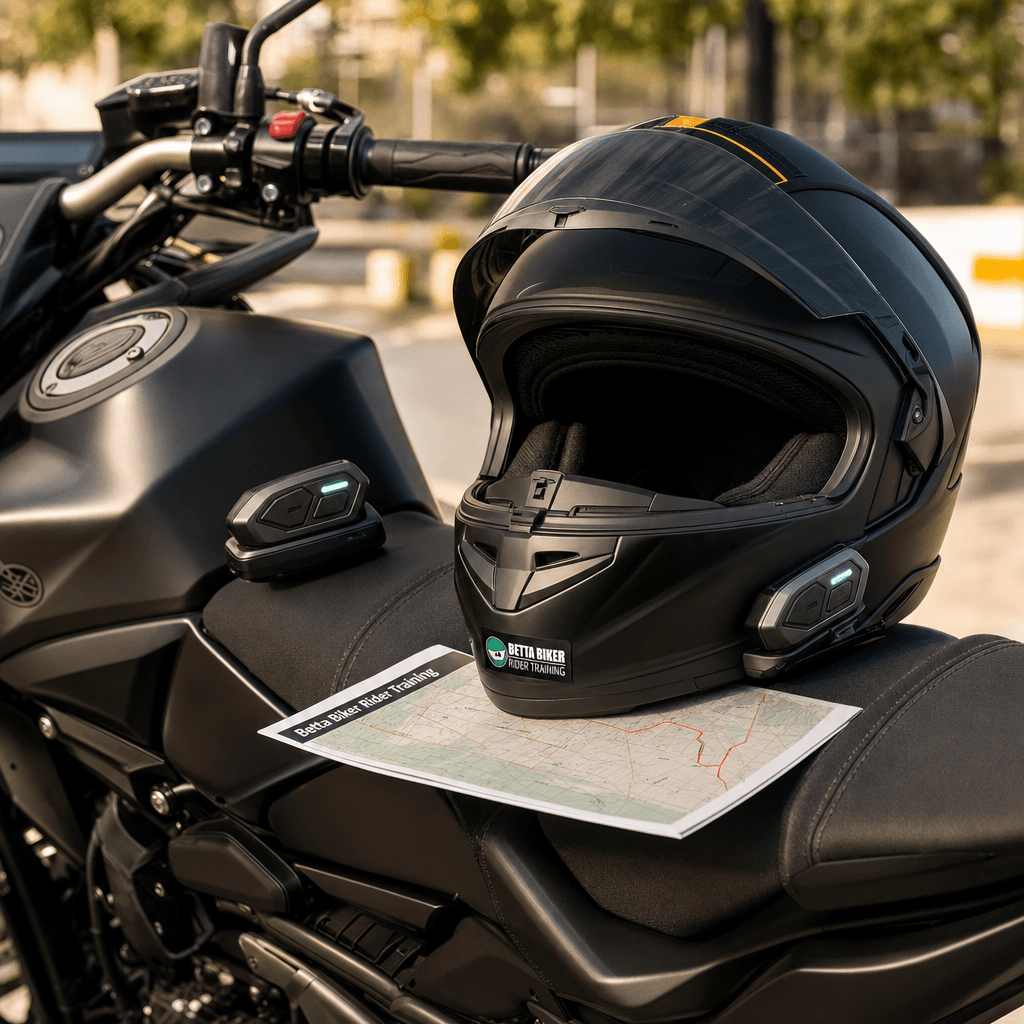
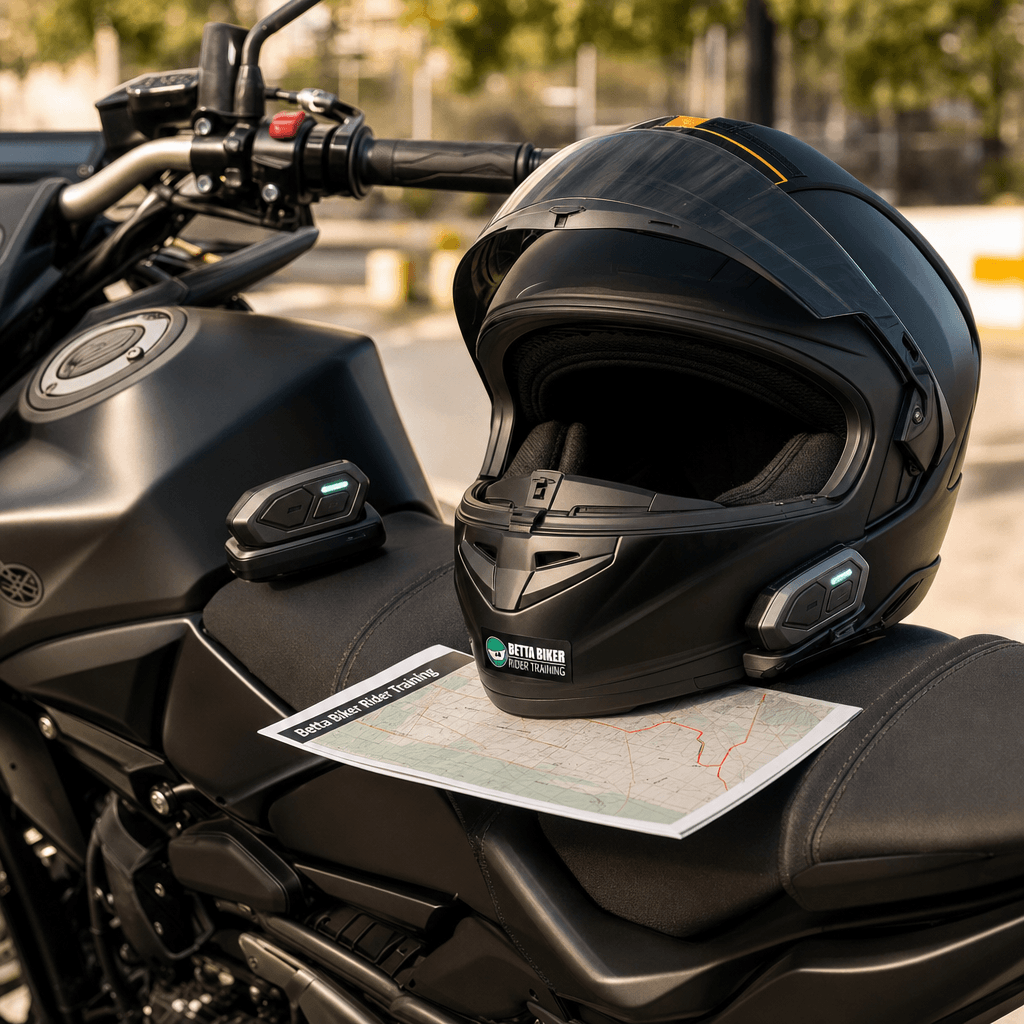
You're cruising along a quiet road in the North West, your riding buddy is somewhere behind you, and you have absolutely no idea if they want to stop for a brew or if they've spotted a hazard. Sound familiar? Motorcycle communication has come a long way since hand signals and hoping for the best. Whether you're a brand new rider who's just passed their CBT or a seasoned biker planning group rides across the Pennines, understanding your Bluetooth and intercom options can genuinely change how you experience riding.
Let's break down everything you need to know.
What Are Motorcycle Communication Systems?
At their core, motorcycle communication systems are wireless devices that mount to your helmet and allow you to do one or more of the following: talk to other riders, listen to music or navigation, take phone calls, and even communicate with a pillion passenger. The technology is almost entirely Bluetooth-based these days, though the way different systems connect to each other varies quite a bit.
There are two broad categories worth understanding. Helmet intercoms are designed primarily for rider-to-rider or rider-to-pillion communication. Bluetooth headsets are more focused on connecting your helmet to your smartphone for music, calls, and sat-nav audio. Many modern units combine both functions, which is where things get interesting.
Bluetooth Headsets: The Basics
A Bluetooth headset clips or bolts onto your helmet and pairs with your phone just like a wireless earpiece would. The benefit is obvious: you get turn-by-turn navigation through your helmet speakers without the need to stare at your phone screen, and you can answer calls without pulling over. For newer riders who've just completed their CBT training and are starting to build their mileage, this kind of setup is a genuinely practical addition.
What to look for in a Bluetooth headset:
Battery life matters more than most people initially think. A unit that gives you six to eight hours of talk or music time is solid for a full day's riding. Anything under four hours will frustrate you on longer journeys.
Sound quality at speed is another factor that separates the decent options from the great ones. Wind noise is the enemy. Look for units that specifically mention noise cancellation or wind reduction technology, because a set of speakers that sounds great at 30mph can become a wall of static at 60mph.
Ease of use with gloves on is something that often gets overlooked in product reviews but becomes very obvious on the road. Large physical buttons and intuitive controls make a real difference.
If you ride in a group or frequently carry a pillion, a proper intercom system is worth the investment. These systems use Bluetooth mesh networking or traditional Bluetooth pairing to allow multiple riders to communicate simultaneously over a set range.
The range question is where marketing meets reality. Manufacturers often quote figures like 1.6km or 2km in ideal conditions. In real-world group riding situations, with corners, hills, and general traffic, you're more realistically looking at half that. Still useful, but worth tempering your expectations.
Mesh intercom technology is the newer development that's genuinely worth paying attention to. Traditional Bluetooth intercoms work on a daisy-chain principle: Rider A connects to Rider B, Rider B connects to Rider C. If Rider B drops out of range, Rider A and Rider C lose communication entirely. Mesh networking removes this problem by allowing all devices to connect to the network itself rather than to individual units. Riders can drop in and out of range without breaking the group communication.
For North West riders doing group runs across places like the Forest of Bowland or the roads around Snowdonia, mesh technology is a real practical upgrade.
The Major Players Worth Knowing
Sena and Cardo are the two dominant brands in this space, and for good reason. Both offer a wide product range from budget-friendly entry-level units to premium systems with full mesh networking capabilities.
Sena tends to appeal to riders who want straightforward, reliable performance and good smartphone app integration. Their mid-range units like the 30K and 50S are popular in group riding communities.
Cardo has leaned heavily into mesh technology with their Packtalk range, which has built a strong reputation for robust range and call quality. Their Packtalk Bold and Packtalk Edge units are frequently recommended on touring forums.
Budget options from brands like Freedconn and FODSPORTS can be tempting, especially for newer riders who aren't yet sure how much they'll actually use the technology. They work, but the build quality, range, and audio performance typically reflects the price point.
Fitting Your System: What You Need to Know
Most intercom units attach via a clip or adhesive mount on the outside of the helmet, with speakers and a microphone that route through or sit against the inside. Full-face helmets generally give the best audio experience because they create a more enclosed sound environment. Open-face and modular helmets work fine but wind noise can be more of a factor.
Always check compatibility between your chosen unit and your specific helmet model. Some helmets have dedicated speaker pockets and chin bar channels for cable routing, which makes for a much cleaner installation. Manufacturers like Shoei and Shark increasingly design their helmets with this in mind.
Pairing With Navigation Apps
One of the most practical uses for any of these systems is pairing with navigation apps like Google Maps, Waze, or dedicated motorcycle routing apps like Scenic or Kurviger. The audio instructions come through your helmet speakers, keeping your eyes on the road rather than glancing at a mounted phone screen.
For riders working through their training and building road experience around Warrington and beyond, this kind of audio navigation support can significantly reduce the mental load of riding in unfamiliar areas.
A Quick Word on Safety
Communication tech is genuinely useful, but it works best when you've already built solid fundamental riding habits. Music, calls, and group chat are all tools that should complement your awareness, not replace it. The riders who get the most out of intercom systems are those who know when to switch things off and focus. That balance between enjoying the ride and staying switched on is something we build into our training from day one.
If you're still at the stage of getting your licence sorted or want to build a stronger foundation before you start adding kit to your setup, we'd love to help. Our CBT courses and DAS programmes are designed for riders at every stage, with small groups and hands-on instruction throughout. Take a look at what we offer and get yourself booked in at Betta Biker or give us a ring on 07539 828073 to have a chat about the right course for you.