Group Riding: How to Stay Safe in Formation 🏍️

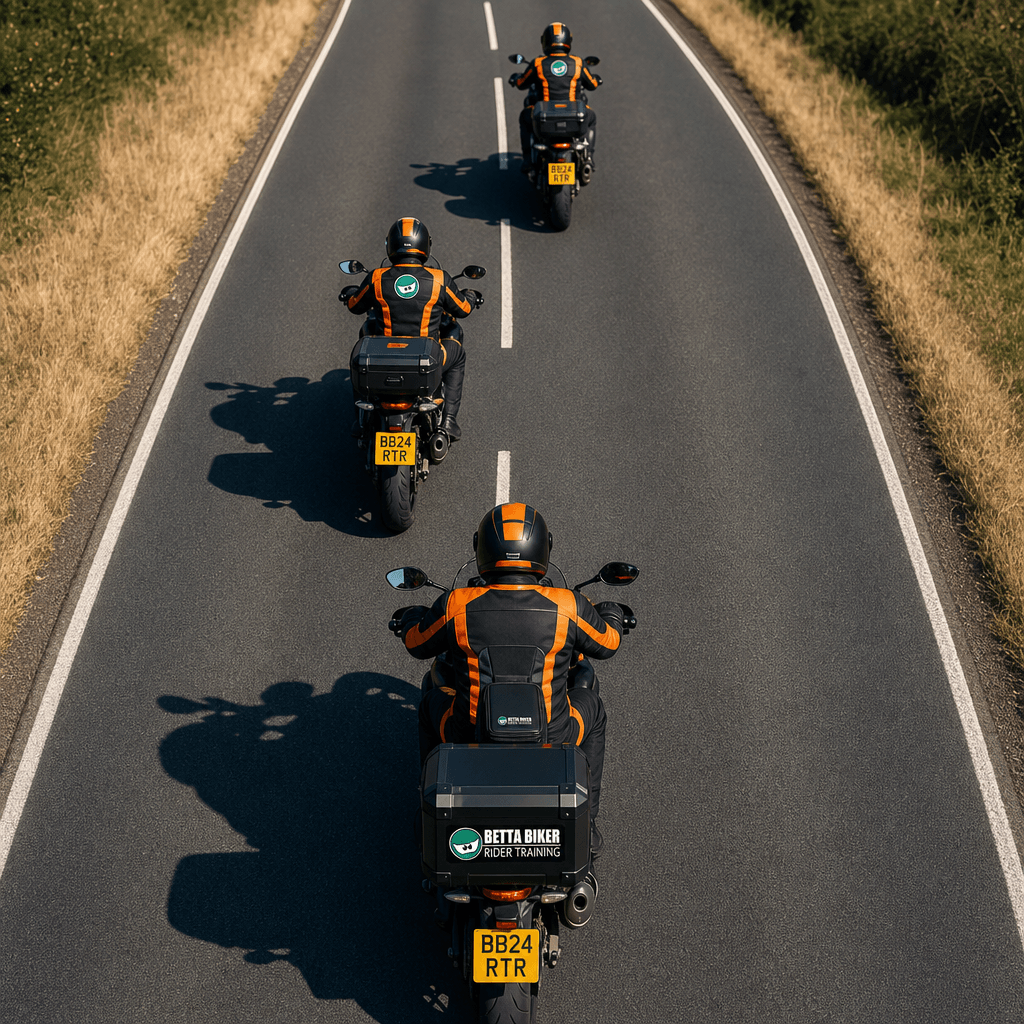
Riding solo is one thing, but heading out with a group adds a whole new layer of skills to master. The biggest mistake group riders make is bunching up β€” riding in a single file with too little space between bikes. The safer approach is a staggered formation, where riders offset their positions across the lane. This gives each rider a better view ahead and more reaction time if something unexpected happens. Communication is just as critical: hand signals, pre-agreed horn patterns, or intercom systems all help keep everyone on the same page without anyone needing to take their eyes off the road for too long.

At Betta Biker, we build the foundations for exactly this kind of riding. When you understand how to handle your bike confidently on your own first, group riding becomes far less daunting. Whether you’re just starting out with your CBT or working towards your full licence, the mental habits you develop early on are what make you a rider others actually want to ride with. Have you ever been caught out in a group ride where things got a bit chaotic? And what’s the one rule you think every group rider should follow? Drop your thoughts below.

The Beginner’s Guide to Motorcycle Locks and Security Devices πŸ”’

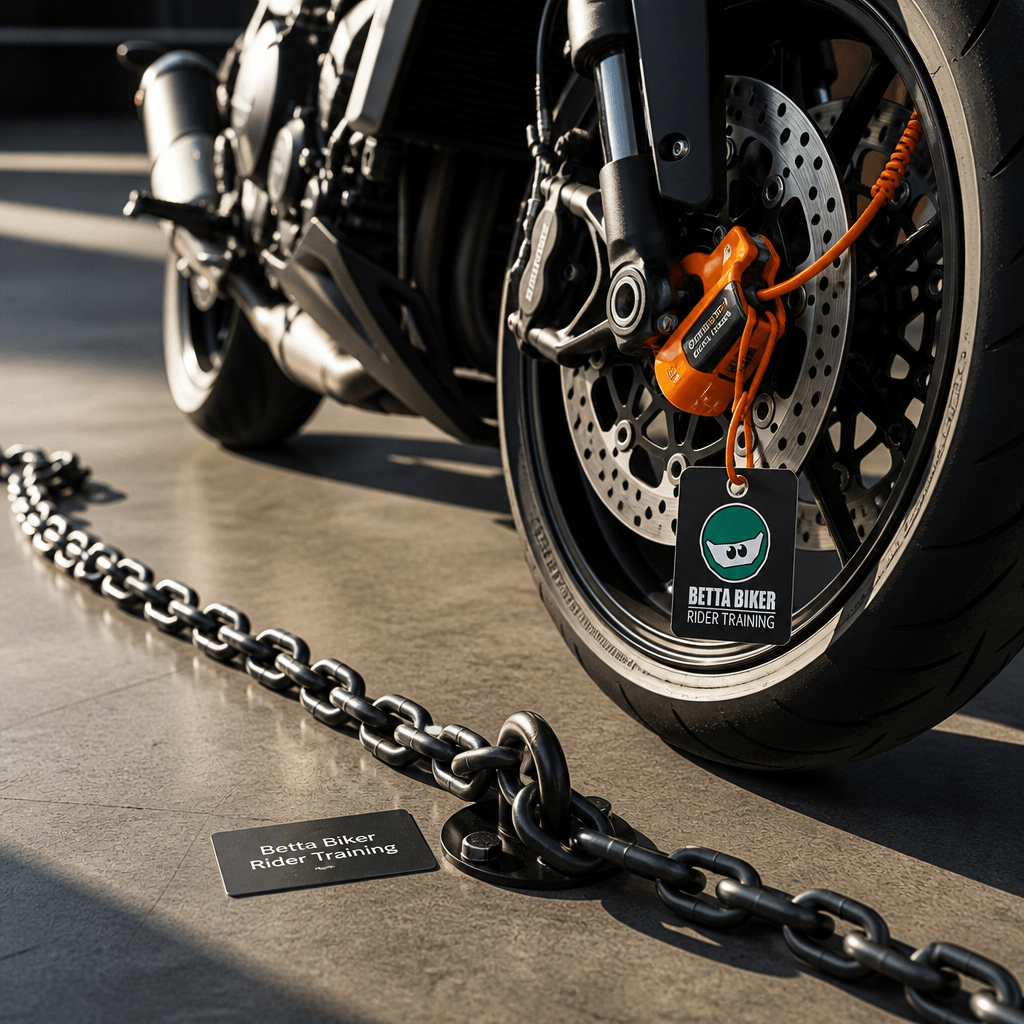
You’ve passed your CBT, you’ve got your bike, and then it hits you: how do you actually keep it safe? Motorcycle theft is a real concern for new riders, and knowing which security devices to use (and how to use them properly) can save you a serious headache. A solid disc lock is a great starting point since it attaches directly to your brake rotor and makes wheeling the bike away almost impossible. Pair that with a heavy-duty chain lock anchored to something fixed, like a ground anchor or street furniture, and you’ve already made your bike a much harder target. A handlebar lock or grip lock adds another visible deterrent on top of that, because thieves tend to move on when a bike looks like too much effort.

Beyond the hardware, where you park matters just as much as what you use. Well-lit, busy areas are always safer than quiet side streets, and if you’re parking at home, a covered garage with an alarm is worth its weight in gold. The golden rule most new riders learn the hard way: always use at least two different types of lock. Have you already got a security setup on your bike, or are you still figuring it out? 🏍️ If you’re yet to get on the road and want to start your journey with a CBT course in the North West, we’d love to help.

Road Camber: Why the Road’s Shape Changes Everything on a Bike

Most riders focus on throttle, brakes, and steering, but the shape of the road beneath your tyres is quietly influencing every corner you take. Road camber (the way a road slopes across its width) can either work with you or against you, and knowing the difference could genuinely save you from a nasty moment.

A positive camber (banked into the bend) gives your tyres more grip and makes cornering feel more forgiving. A negative or adverse camber (sloping away from the bend) does the opposite, reducing grip right when you need it most. Junctions, roundabouts, and rural bends are classic places where adverse camber catches riders off guard, especially in wet August conditions here in the North West. The key habit to build is reading the road ahead before you commit to your line, adjusting your speed and position before the bend rather than reacting mid-corner. Have you ever been caught out by a camber you didn’t spot coming? Which type of road or junction gives you the most cause for concern?

This is exactly the kind of “thinking rider” awareness we build into our training at Betta Biker from day one. Whether you’re just starting out with a CBT or working towards your full licence, understanding how the road behaves under your bike is what separates a nervous rider from a confident one. If you’re ready to get started, give us a ring on 07539 828073 or check the link below. 🏍️

Motorcycle Comms Systems: What You Need to Know 🎧

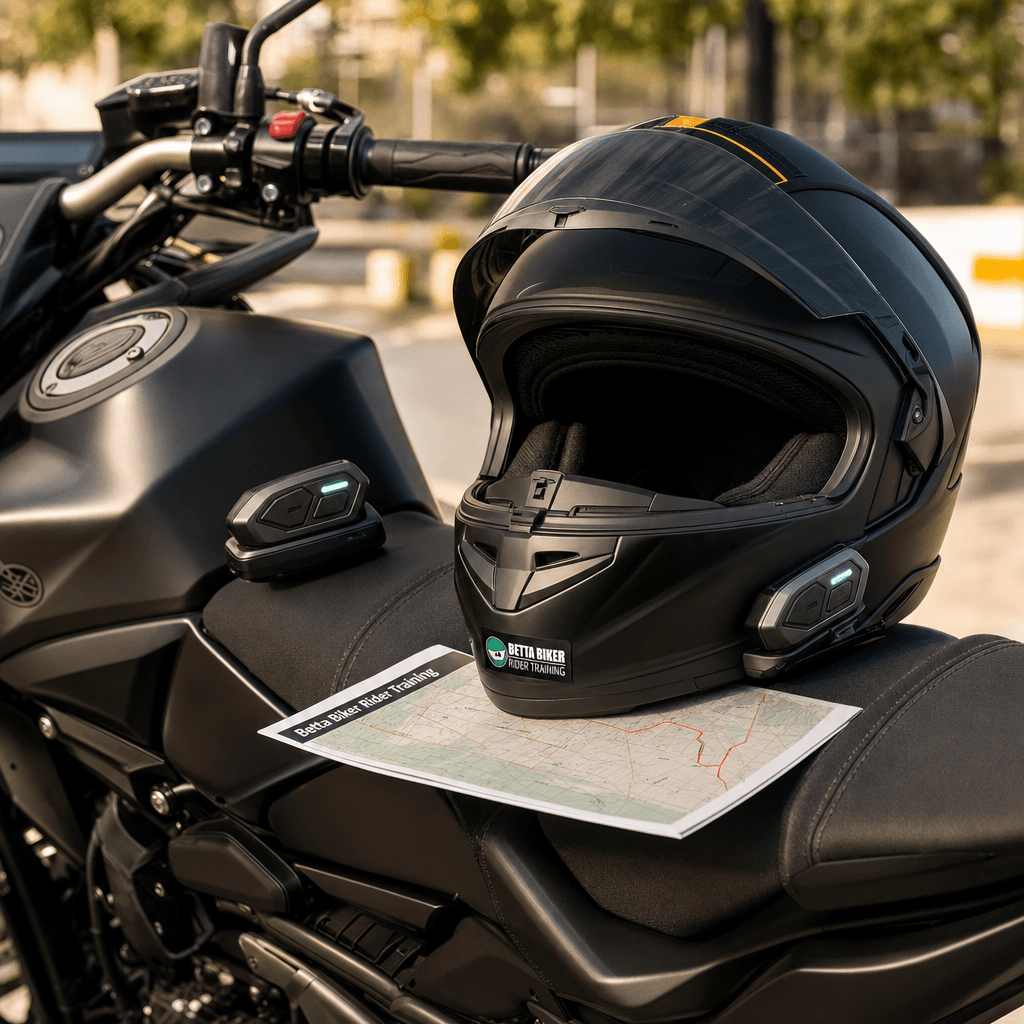
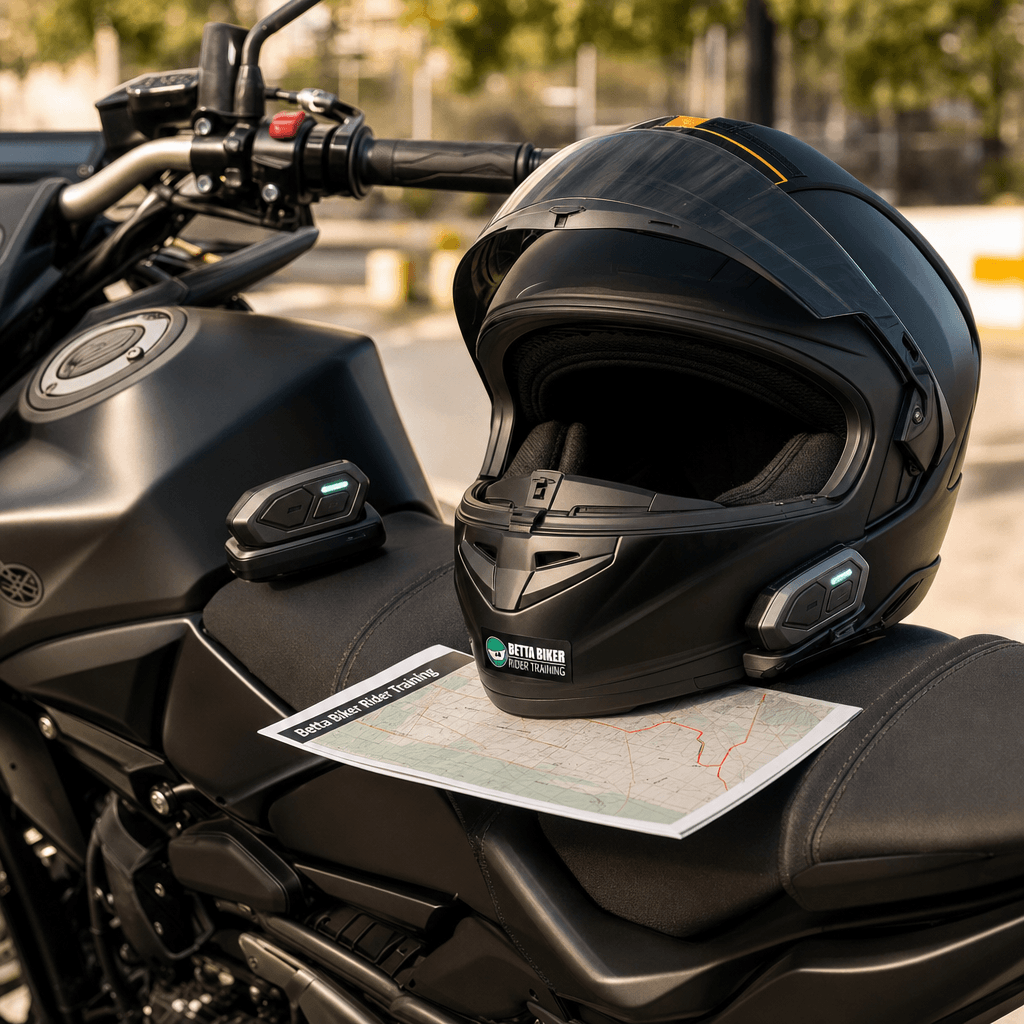
Riding solo is one thing, but whether you’re planning group rides or just want music and sat-nav through your helmet, a good Bluetooth or intercom system changes everything. The market has come a long way, and choosing the right setup really comes down to how and where you ride.

For group riding, a mesh intercom system (like those from Cardo or Sena) lets multiple riders stay connected without the faff of pairing one-to-one, which is a massive plus on longer runs. If you’re mostly riding solo, a single-rider Bluetooth unit handles calls, GPS directions, and music cleanly without the extra cost. Key things to look for include battery life (aim for 10+ hours for day trips), wind noise suppression, and whether the unit integrates with your specific helmet shape before you buy. Have you already got a comms system, or is it something you’ve been thinking about adding to your setup? Drop your recommendations below, we’d love to hear what the North West riding community is running. 🏍️

At Betta Biker, we’re passionate about helping riders build confidence and knowledge both on and off the bike. If you’re still working towards getting your licence, our CBT courses start from just Β£225 in Warrington, and we provide the bike and equipment. What’s stopping you from getting started?

The Complete Guide to Motorcycle Bluetooth & Intercom Systems

You're cruising along a quiet road in the North West, your riding buddy is somewhere behind you, and you have absolutely no idea if they want to stop for a brew or if they've spotted a hazard. Sound familiar? Motorcycle communication has come a long way since hand signals and hoping for the best. Whether you're a brand new rider who's just passed their CBT or a seasoned biker planning group rides across the Pennines, understanding your Bluetooth and intercom options can genuinely change how you experience riding.

Let's break down everything you need to know.

What Are Motorcycle Communication Systems?

At their core, motorcycle communication systems are wireless devices that mount to your helmet and allow you to do one or more of the following: talk to other riders, listen to music or navigation, take phone calls, and even communicate with a pillion passenger. The technology is almost entirely Bluetooth-based these days, though the way different systems connect to each other varies quite a bit.

There are two broad categories worth understanding. Helmet intercoms are designed primarily for rider-to-rider or rider-to-pillion communication. Bluetooth headsets are more focused on connecting your helmet to your smartphone for music, calls, and sat-nav audio. Many modern units combine both functions, which is where things get interesting.

Bluetooth Headsets: The Basics

A Bluetooth headset clips or bolts onto your helmet and pairs with your phone just like a wireless earpiece would. The benefit is obvious: you get turn-by-turn navigation through your helmet speakers without the need to stare at your phone screen, and you can answer calls without pulling over. For newer riders who've just completed their CBT training and are starting to build their mileage, this kind of setup is a genuinely practical addition.

What to look for in a Bluetooth headset:

Battery life matters more than most people initially think. A unit that gives you six to eight hours of talk or music time is solid for a full day's riding. Anything under four hours will frustrate you on longer journeys.

Sound quality at speed is another factor that separates the decent options from the great ones. Wind noise is the enemy. Look for units that specifically mention noise cancellation or wind reduction technology, because a set of speakers that sounds great at 30mph can become a wall of static at 60mph.

Ease of use with gloves on is something that often gets overlooked in product reviews but becomes very obvious on the road. Large physical buttons and intuitive controls make a real difference.

Intercom Systems: Rider-to-Rider Communication

If you ride in a group or frequently carry a pillion, a proper intercom system is worth the investment. These systems use Bluetooth mesh networking or traditional Bluetooth pairing to allow multiple riders to communicate simultaneously over a set range.

The range question is where marketing meets reality. Manufacturers often quote figures like 1.6km or 2km in ideal conditions. In real-world group riding situations, with corners, hills, and general traffic, you're more realistically looking at half that. Still useful, but worth tempering your expectations.

Mesh intercom technology is the newer development that's genuinely worth paying attention to. Traditional Bluetooth intercoms work on a daisy-chain principle: Rider A connects to Rider B, Rider B connects to Rider C. If Rider B drops out of range, Rider A and Rider C lose communication entirely. Mesh networking removes this problem by allowing all devices to connect to the network itself rather than to individual units. Riders can drop in and out of range without breaking the group communication.

For North West riders doing group runs across places like the Forest of Bowland or the roads around Snowdonia, mesh technology is a real practical upgrade.

The Major Players Worth Knowing

Sena and Cardo are the two dominant brands in this space, and for good reason. Both offer a wide product range from budget-friendly entry-level units to premium systems with full mesh networking capabilities.

Sena tends to appeal to riders who want straightforward, reliable performance and good smartphone app integration. Their mid-range units like the 30K and 50S are popular in group riding communities.

Cardo has leaned heavily into mesh technology with their Packtalk range, which has built a strong reputation for robust range and call quality. Their Packtalk Bold and Packtalk Edge units are frequently recommended on touring forums.

Budget options from brands like Freedconn and FODSPORTS can be tempting, especially for newer riders who aren't yet sure how much they'll actually use the technology. They work, but the build quality, range, and audio performance typically reflects the price point.

Fitting Your System: What You Need to Know

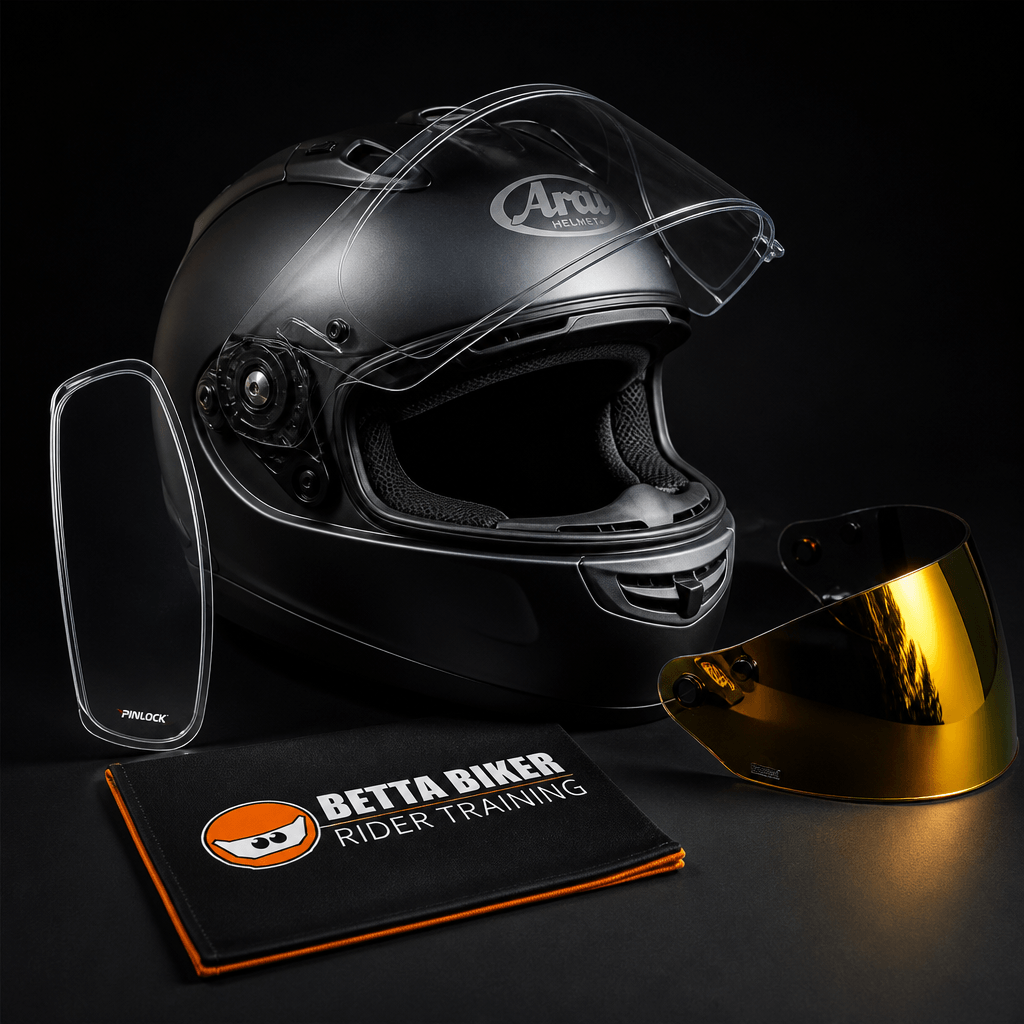
Most intercom units attach via a clip or adhesive mount on the outside of the helmet, with speakers and a microphone that route through or sit against the inside. Full-face helmets generally give the best audio experience because they create a more enclosed sound environment. Open-face and modular helmets work fine but wind noise can be more of a factor.

Always check compatibility between your chosen unit and your specific helmet model. Some helmets have dedicated speaker pockets and chin bar channels for cable routing, which makes for a much cleaner installation. Manufacturers like Shoei and Shark increasingly design their helmets with this in mind.

Pairing With Navigation Apps

One of the most practical uses for any of these systems is pairing with navigation apps like Google Maps, Waze, or dedicated motorcycle routing apps like Scenic or Kurviger. The audio instructions come through your helmet speakers, keeping your eyes on the road rather than glancing at a mounted phone screen.

For riders working through their training and building road experience around Warrington and beyond, this kind of audio navigation support can significantly reduce the mental load of riding in unfamiliar areas.

A Quick Word on Safety

Communication tech is genuinely useful, but it works best when you've already built solid fundamental riding habits. Music, calls, and group chat are all tools that should complement your awareness, not replace it. The riders who get the most out of intercom systems are those who know when to switch things off and focus. That balance between enjoying the ride and staying switched on is something we build into our training from day one.

If you're still at the stage of getting your licence sorted or want to build a stronger foundation before you start adding kit to your setup, we'd love to help. Our CBT courses and DAS programmes are designed for riders at every stage, with small groups and hands-on instruction throughout. Take a look at what we offer and get yourself booked in at Betta Biker or give us a ring on 07539 828073 to have a chat about the right course for you.

Dual Carriageway Riding: What Nobody Tells You First

Making the jump from quiet local roads to a dual carriageway on a motorcycle is one of those moments that catches a lot of riders off guard. The speeds are higher, the gaps close faster, and there’s very little room for hesitation. Getting your head around the difference before you’re actually out there is what separates a confident ride from a nerve-wracking one.

The big things to focus on are your observation and planning. On a dual carriageway, you need to be reading the road much further ahead than you would on a 30mph street. Joining from a slip road means matching your speed before you merge, not after. Staying out of blind spots (especially around lorries) isn’t just good practice, it’s essential. And lane discipline matters far more at 60-70mph where small errors carry real consequences. Have you ever felt unprepared the first time you hit faster roads? 🏍️ What helped you most? If you’re still building up to that stage, solid foundational training makes all the difference when those moments arrive.

Riding with a Passenger? Here’s What Changes on a Bike

Most riders are surprised by how much a passenger affects the way a motorcycle handles. The extra weight shifts your centre of gravity, increases braking distances, and changes how the bike steers through corners. Before you ask anyone to hop on the back, there are a few things worth knowing.

Communication before you set off is huge. Does your passenger know to lean with you in corners, not against you? Do they know to hold on firmly but avoid grabbing you suddenly? Smooth throttle and brake inputs become even more important with someone on the pillion, because any sudden movements are amplified. It’s also worth checking your tyre pressures and rear suspension settings before the ride, as most bikes need adjustments to handle the additional load properly. Have you ever ridden with a passenger before, or are you thinking about it for the first time? 🏍️

At Betta Biker Rider Training, we’ve been helping riders build exactly this kind of practical knowledge since 2015. Whether you’re a complete beginner starting with your CBT or you’re working towards your full licence, our training is built around making you a thinking rider, not just a licensed one. Based in Warrington and serving the North West, our courses keep group sizes small so you always get proper one-to-one attention. What part of riding do you think most people underestimate when they’re starting out? πŸ‘‡

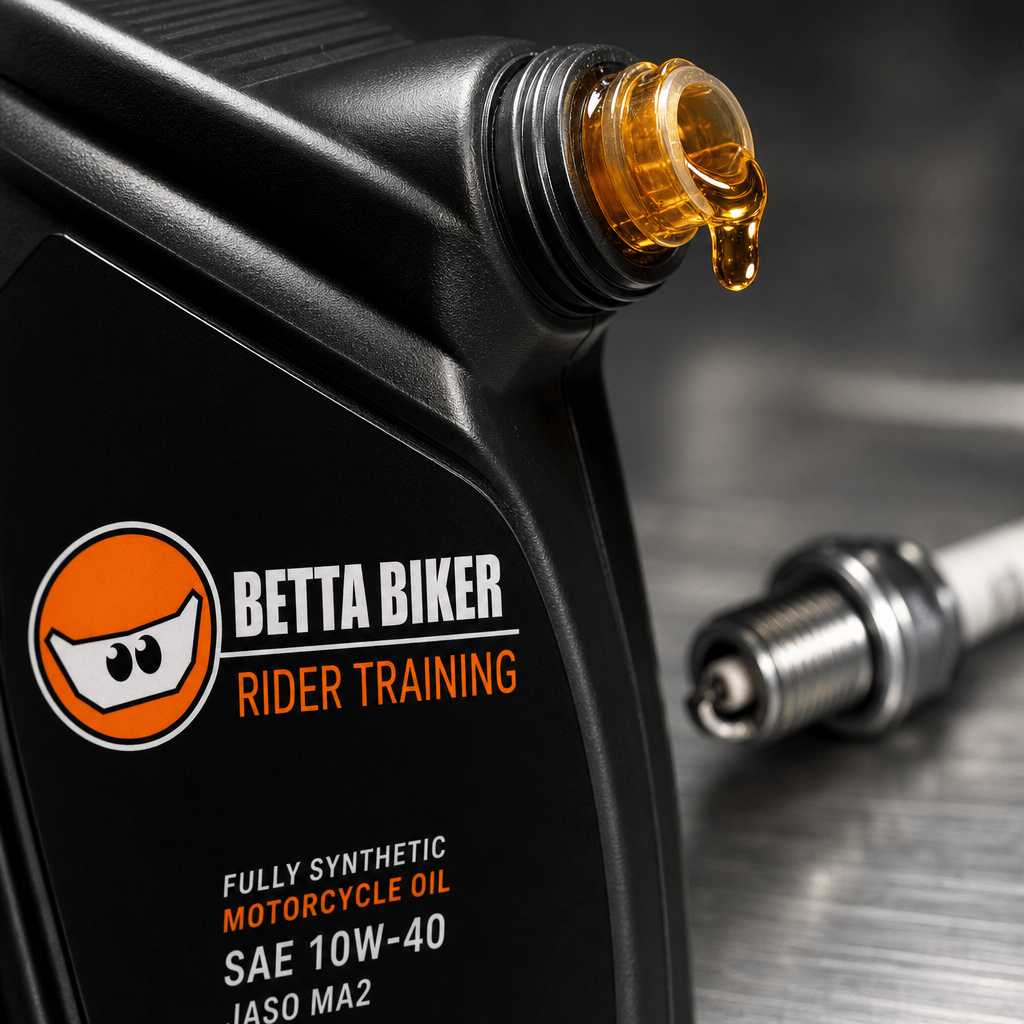
What’s Actually in Your Motorcycle Oil (And Why It Matters)

Most riders know they need to change their oil, but far fewer know why it breaks down, or what they’re even looking at when they pick a grade off the shelf. Getting this wrong doesn’t just cost you money. It costs you engine life.

Motorcycle oils come in three main types: mineral (basic, refined crude oil, fine for older or low-mileage bikes), semi-synthetic (a blend that offers better performance across temperature ranges), and fully synthetic (engineered for maximum protection, consistency, and longevity). The grade on the bottle, like 10W-40, tells you how the oil flows in cold starts versus when the engine is up to temperature. A thicker oil won’t protect a cold engine on a winter morning the same way a thinner one will, and running the wrong grade for your bike’s spec is one of those small habits that quietly causes big damage over time. Regular changes matter because oil doesn’t just lubricate. It carries away heat, keeps internal components clean, and stops metal-on-metal wear. Once it degrades, it stops doing all three. πŸ”§

Whether you’re brand new to bikes or just getting back into riding, understanding your machine from the ground up makes you a sharper, safer rider. That’s something we’re pretty passionate about here at Betta Biker. What’s one thing about motorcycle maintenance you wish someone had explained to you earlier? Drop it in the comments, and if you’re thinking about starting your CBT or going for your full licence, we’re based in Warrington and cover the whole North West. 🏍️

Crosswinds and Motorcycles: How to Stay Stable in Gusty Conditions

There's a particular feeling every rider knows. You're cruising along a dual carriageway or crossing an exposed bridge, and without warning the bike gets shoved sideways. Your heart rate spikes, your grip tightens, and for a split second everything feels uncertain. Crosswinds are one of those hazards that don't get nearly enough attention in everyday riding conversation, yet they catch people out constantly, especially here in the North West where exposed roads, motorway bridges, and open farmland stretches can turn a straightforward ride into a white-knuckle experience.

Understanding what's happening and knowing how to respond makes all the difference. This isn't about being fearless; it's about being prepared.

Why Crosswinds Catch Riders Off Guard

Unlike car drivers, motorcyclists have almost no shell protecting them from lateral air pressure. Your body and the bike together act as a large sail, and when a strong gust hits from the side, you feel the full force of it. The problem is compounded by gusts that arrive suddenly and unpredictably, particularly when you emerge from a cutting, pass a gap in a hedgerow, or overtake a large lorry.

The lorry scenario is worth highlighting on its own. When you ride alongside a heavy goods vehicle, you enter a bubble of disturbed air. The moment you pass the front of that lorry, you can get hit by a significant crosswind that the vehicle was blocking. Many riders are caught completely off guard by this because the change happens in under a second.

Reading the Environment Before It Reads You

Good crosswind management starts well before the gust arrives. Anticipation is your primary tool. When you're approaching exposed sections of road, bridges, gaps in tree lines, or the crest of a hill, start thinking about wind conditions before you get there.

Check flags, smoke, trees, and even puddles rippling in fields beside the road. If everything is indicating wind from the right, position yourself slightly to the right of your lane. This gives you space to drift left without crossing into oncoming traffic or mounting the kerb. You're essentially creating a buffer zone in the direction the wind will push you.

Speed management matters here too. The faster you're travelling, the greater the aerodynamic forces involved. Slowing down slightly when approaching known exposure points reduces the impact of gusts and gives you more time to react.

The Countersteering Response

When a crosswind hits, the instinct for many riders (especially those newer to biking) is to fight the bike and wrestle it back upright. That's often the wrong move.

A motorcycle is a self-correcting machine when you let it work. At speed, leaning into the wind slightly before the gust arrives allows the bike to find its own equilibrium. Experienced riders often describe this as "pre-leaning" or "crabbing" into the wind. You're essentially angling the bike so that when the gust pushes, you return to upright rather than getting knocked further over.

This connects directly to countersteering, the technique where you push forward on the handlebar on the side you want to lean towards. A gentle forward push on the right bar leans the bike right. Done smoothly and with measured force, this lets you make precise lean adjustments without destabilising the chassis.

The key word throughout all of this is smooth. Sudden, jerky inputs when dealing with crosswinds tend to make things worse. Relax your arms, keep a firm but not rigid grip, and let the bike do some of the work.

Body Position and Grip

Your body is part of the aerodynamic equation. Tucking in slightly and lowering your profile reduces the surface area exposed to the wind. Some riders shift their weight slightly into the wind direction, planting their inside knee against the tank for extra stability.

Avoid the temptation to tense up completely. Tense arms transfer every gust directly into the handlebars, amplifying the instability. Think of your arms as shock absorbers; they should flex and absorb rather than transmit.

Throttle control also plays a role. Maintaining a steady throttle keeps the bike's drive consistent and the chassis settled. Backing off the throttle sharply mid-corner or mid-gust can unsettle the rear, which is the last thing you want when you're already managing lateral forces.

Overtaking and High-Sided Vehicles

As we mentioned, passing lorries and high-sided vehicles requires specific preparation. Before you begin the overtake, check the conditions ahead. If you can see flags or trees suggesting a strong crosswind from the left on an exposed stretch, think carefully about whether the overtake is worth it at that moment.

When you do overtake, accelerate through the manoeuvre rather than loitering alongside the vehicle. The longer you spend in the turbulent air beside a lorry, the longer you're exposed to unpredictable gusts. Complete the overtake decisively and move back to a safe position ahead of the vehicle promptly.

Building These Skills from the Ground Up

None of this is instinctive. These responses need to be practised and understood before you find yourself in the situation. That's why the mental side of riding matters just as much as the physical mechanics.

We've been training riders across the North West since 2015, and our whole approach is built around developing thinking riders rather than just riders who can operate the controls. Chief Instructor Nic Garner has been riding since 1976, and the situations he's navigated over five decades of experience shape how we teach every aspect of hazard awareness, including wind management.

Whether you're just starting out with your CBT or you're looking to progress to a full licence through our DAS course, understanding how your bike behaves in challenging conditions is part of becoming a genuinely capable and confident rider.

If you're ready to start your riding journey or take the next step in your licence progression, visit www.bettabiker.co.uk to find out more about our courses or give us a call on 07539 828073 to have a chat about which route is right for you. Our CBT courses are available at weekends and bank holidays, everything is provided, and we keep group sizes small so you get proper, individual attention from day one.

Gusty conditions will always be part of riding in the UK. The difference between a rider who handles them with confidence and one who gets caught out is knowledge, practice, and the right foundations built early.


Terms and Conditions