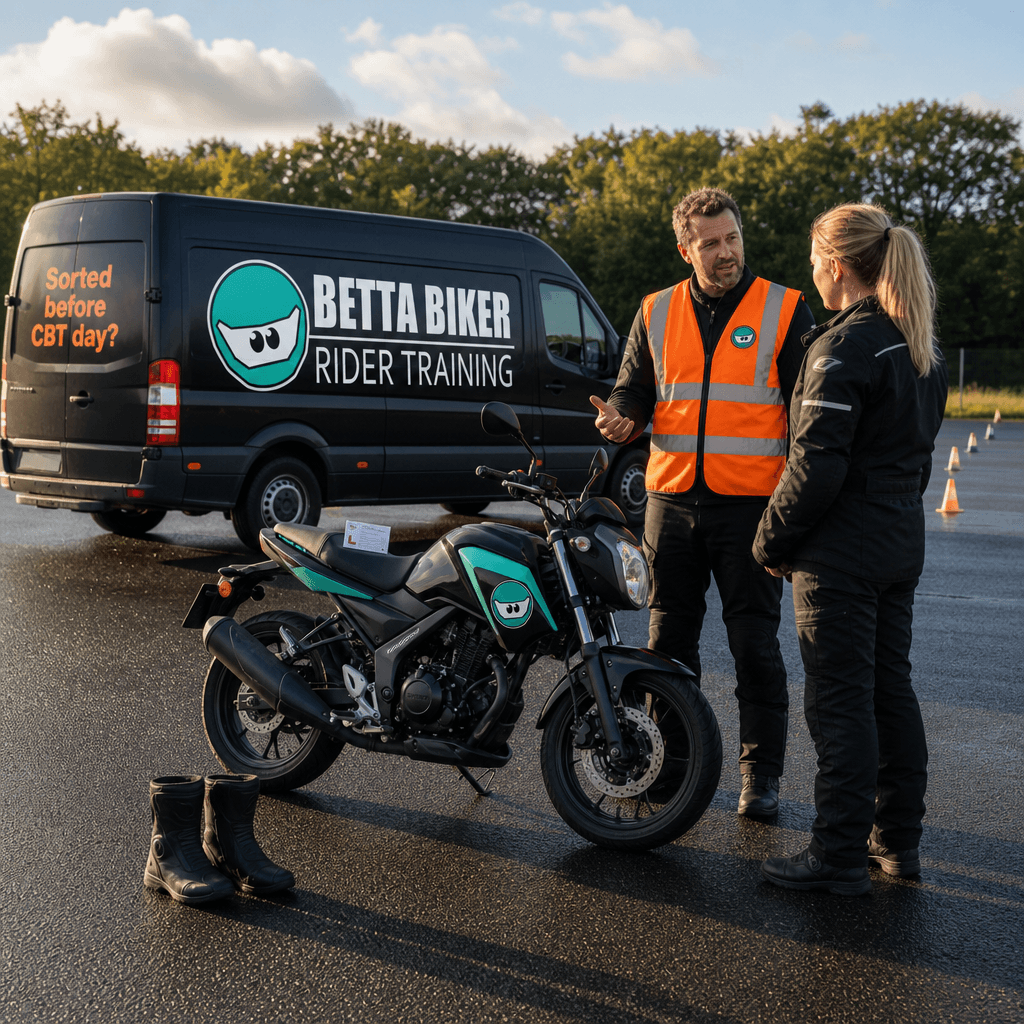
Booking your first CBT? Here’s how it works

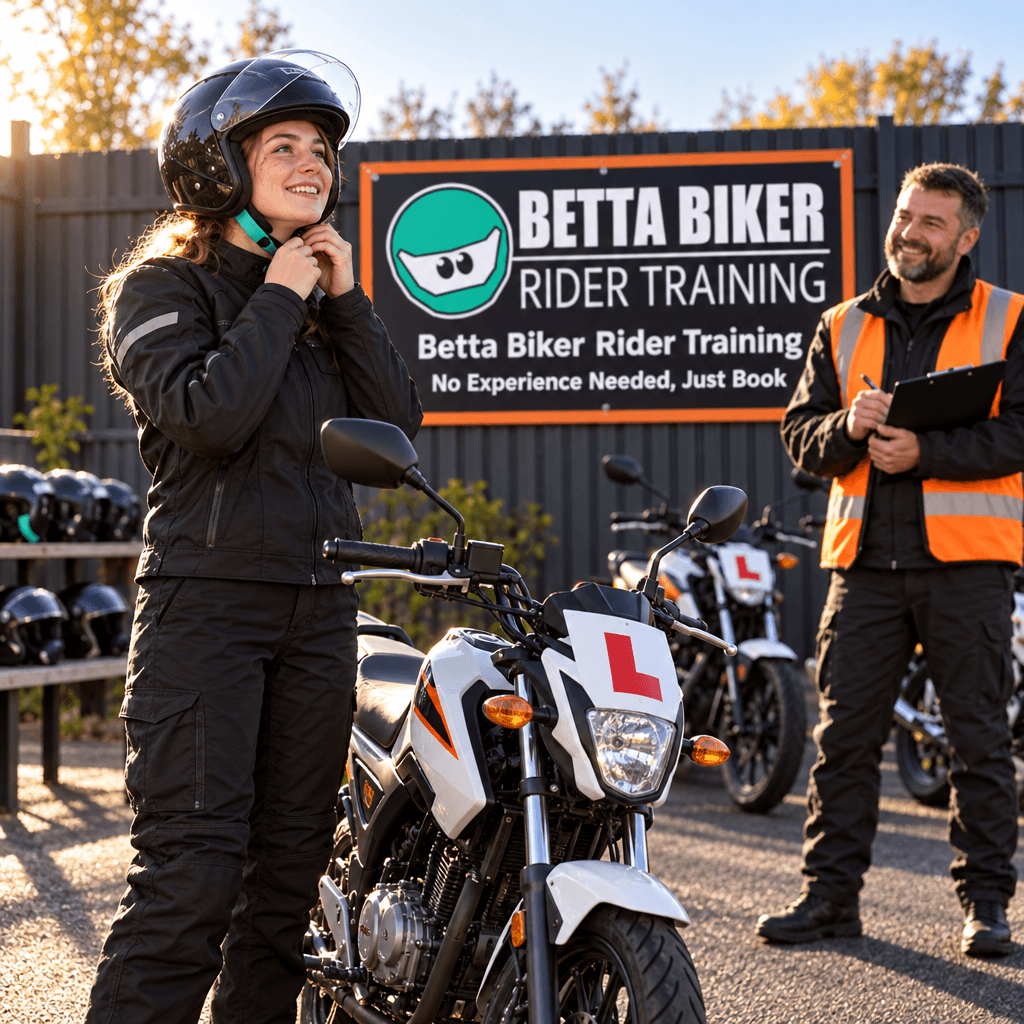
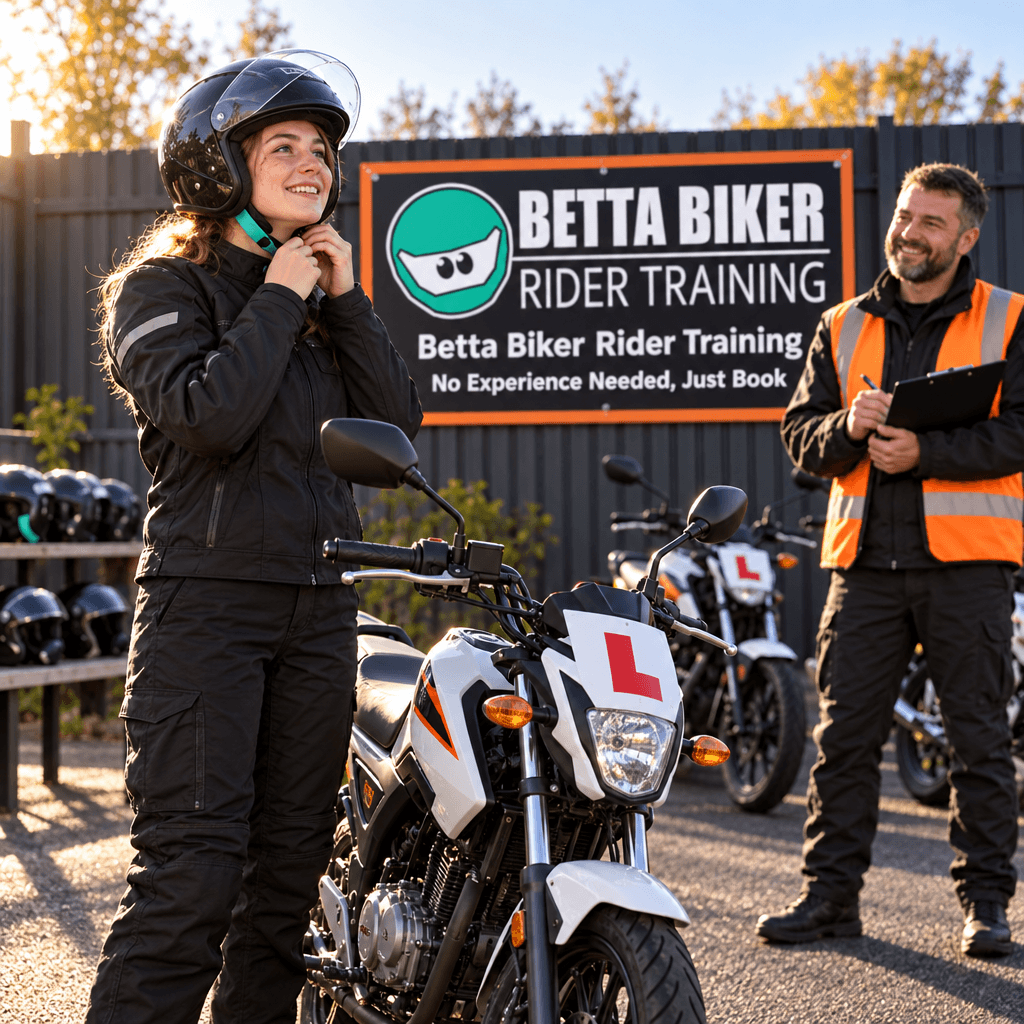
Never sat on a bike before? That’s exactly who CBT is for. No experience needed, no judgement, just a proper introduction to riding.

Here’s what to know before you book with us in Warrington.

You need to be 16 for a 49cc machine, or 17 for a 125cc. The course runs across one day, weekends only, and covers classroom learning plus practical riding, all assessed at the end.

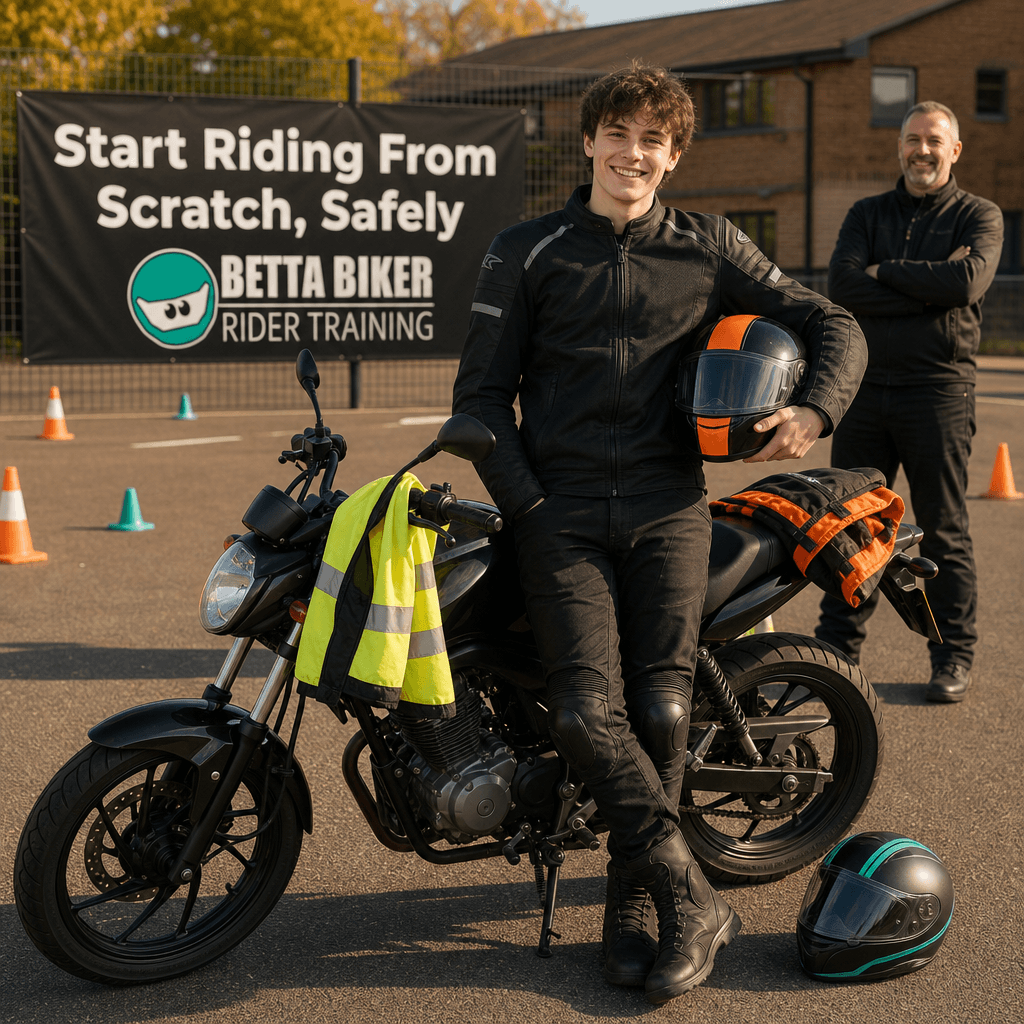
We provide the bike and all the kit, and we keep groups small so you actually get attention rather than getting lost in the crowd. CBT costs £225.

Fancy getting a head-start before the big day? Registering in advance means you turn up already familiar with some of the basics.

What’s stopping you from booking your first lesson this weekend?

How Do You Book a CBT Course for Beginners?

You book a CBT by contacting a training provider directly, either by phone, message, or an online booking form, then registering beforehand if the option's there so you turn up already familiar with the basics. At Betta Biker, that means calling us on 07539 828073, messaging us, or booking online, ready for a CBT course in Warrington at weekends, priced at £225.

What is CBT and who is it for?

Compulsory Basic Training (CBT) is the course every new rider needs before they can ride a scooter or geared motorcycle up to 125cc on the road, on L-plates, without a full licence. It's a programme of instruction, safe practice, and assessment, not a test you pass or fail in the traditional sense. You either meet the required standard on the day or you get more practice until you do.

It's built for complete beginners. If you've never sat on a bike before, that's fine, that's who CBT is for. You need to be at least 16 years old to ride a 49cc machine, or 17 for a 125cc machine. We treat every student as a novice until they show us otherwise, so nobody's left behind because they didn't know which lever does what.

What happens during a CBT course?

CBT runs as a single day combining classroom instruction with practical, on-bike training. You'll cover the theory first: how the bike works, basic road rules, hazard awareness, then move outside for practical riding in a controlled area before eventually heading out on the road with an instructor.

We keep group sizes small so everyone gets proper attention rather than getting lost in a crowd. A bike and all the necessary kit are provided as part of the course, so you don't need to own anything or arrive kitted out to start. Our whole approach is built around developing "thinking" riders, people who understand why they're doing something, not just how, because that's what keeps you safe once you're out there on your own.

How do you book a CBT with Betta Biker?

Booking is straightforward:

  • Call us on 07539 828073, or send a message if you'd rather not phone.
  • Book online through our CBT booking page, where you can secure your date directly.
  • Register beforehand if you can. Getting a head-start on the material before the day means you'll walk in already understanding the basics, which makes the practical side click faster.

Our CBT courses run in Warrington, at weekends only, and cost £225. That price covers the classroom session, practical training, use of a bike, and all riding equipment for the day. We'd always recommend booking a couple of weeks ahead where possible, since weekend slots fill up, particularly through spring and summer when demand for training picks up.

Do you need any experience before your CBT?

No. CBT is specifically designed for riders with zero experience. Whether you've never touched a motorcycle or you rode dirt bikes as a kid and want to get road-legal, the course starts from the same place: the fundamentals. Nobody's rushed ahead because they've "probably done this before."

That said, registering in advance and having a look at the basics beforehand does help. It's not required, but arriving with even a rough idea of controls and terminology means more of your CBT day gets spent riding and less spent explaining.

What can you ride after passing CBT?

Once you've completed CBT successfully, you can ride a moped up to 49cc from age 16, or a motorcycle up to 125cc (with a maximum power output of 11kW) from age 17, on L-plates, for two years before you'd need to renew your CBT certificate if you haven't progressed to a full licence. It's the fastest legal route onto two wheels in the UK.

If you want to go further and ride bigger machines without L-plate restrictions, that's where a DAS (Direct Access Scheme) full licence course comes in. We offer that too, and it builds directly on the skills and habits you develop during CBT.

Common questions about booking a CBT course

Can I book CBT if I've never ridden a motorcycle before?
Yes. CBT is built for complete novices, so having no prior riding experience is completely normal, not an obstacle. Our instructors start from the basics and build up from there over the course of the day.

How old do I need to be to book a CBT?
You need to be at least 16 to ride a 49cc moped, or 17 to ride a 125cc motorcycle. You'll need to bring valid ID and, ideally, have already checked your provisional licence is in order before the day.

Do I need my own bike or gear for CBT?
No. We provide the bike and all the riding equipment you'll need for the day. You just need to turn up ready to learn, in sensible clothing and sturdy footwear.

How long does a CBT course take?
CBT typically runs as a single day, combining classroom theory with practical riding. The exact time depends on how quickly each rider reaches the required standard, since it's about competence, not a fixed clock.

Ready to book your CBT?

If you're in Warrington or nearby and ready to get started, booking is simple: call us on 07539 828073, send us a message, or book your CBT course directly online at Betta Biker. Courses run at weekends, cost £225, and are led by instructors with decades of real riding experience behind them, including Chief Instructor Nic Garner, who's been riding since 1976. Register beforehand if you can, then let's get you on two wheels properly, safely, and with confidence that actually lasts.

Scooter or geared bike for your CBT? Here’s how to choose

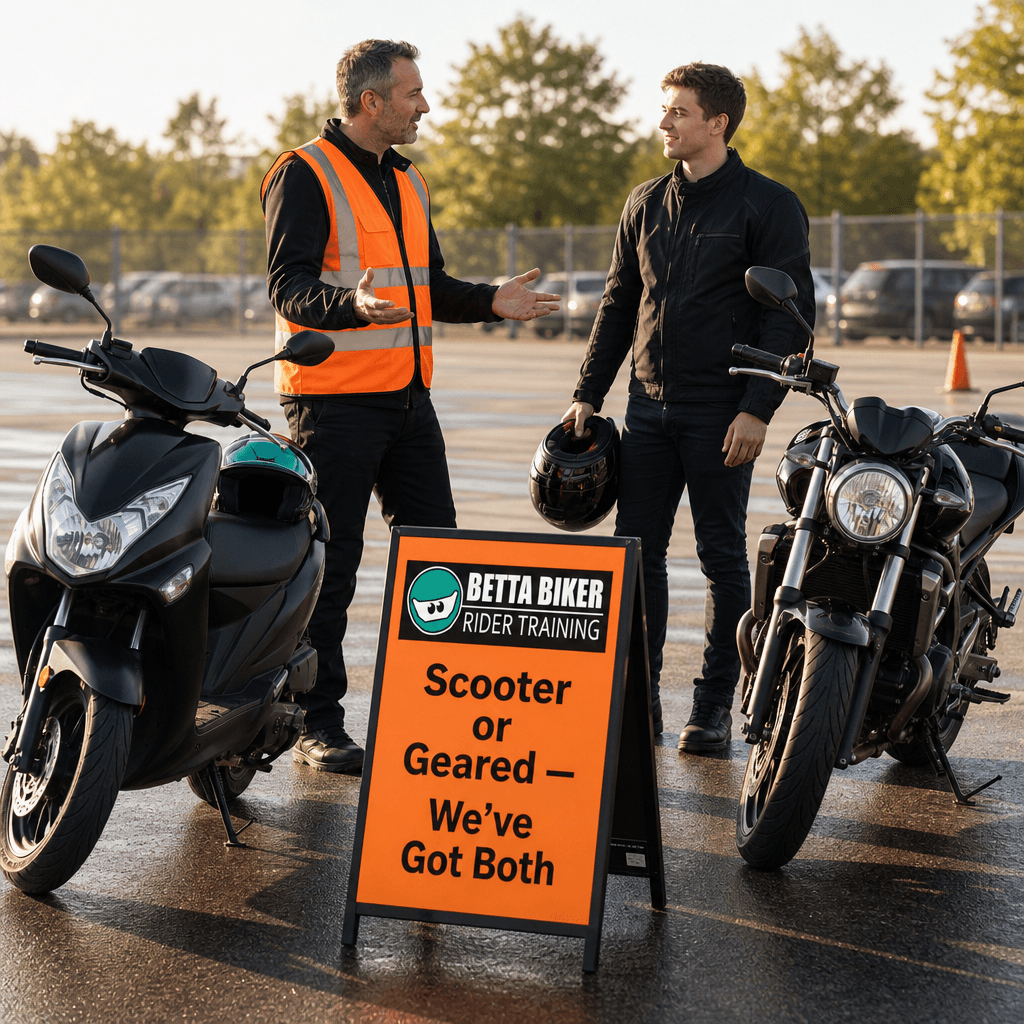
Both let you ride away with a valid licence at the end of the day, so the choice really comes down to what suits you.

Scooters are automatic, twist and go. No clutch, no gears to think about, which means one less thing to learn while you’re also getting used to balance, observation and road positioning.

Geared bikes take a bit more coordination early on (clutch control takes most people a session or two to click with), but if you’re planning to move on to a bigger bike later, learning gears now makes that step feel familiar rather than brand new.

Either way, our CBT covers the same ground: classroom theory, practical training and assessment, all in one day at weekends. We provide the bike and kit, so you don’t need to own anything before you turn up.

If you’re 16 you can ride a 49cc machine, and 17 opens up 125cc. Are you leaning towards keeping things simple with a twist-and-go, or getting the gears sorted from day one?

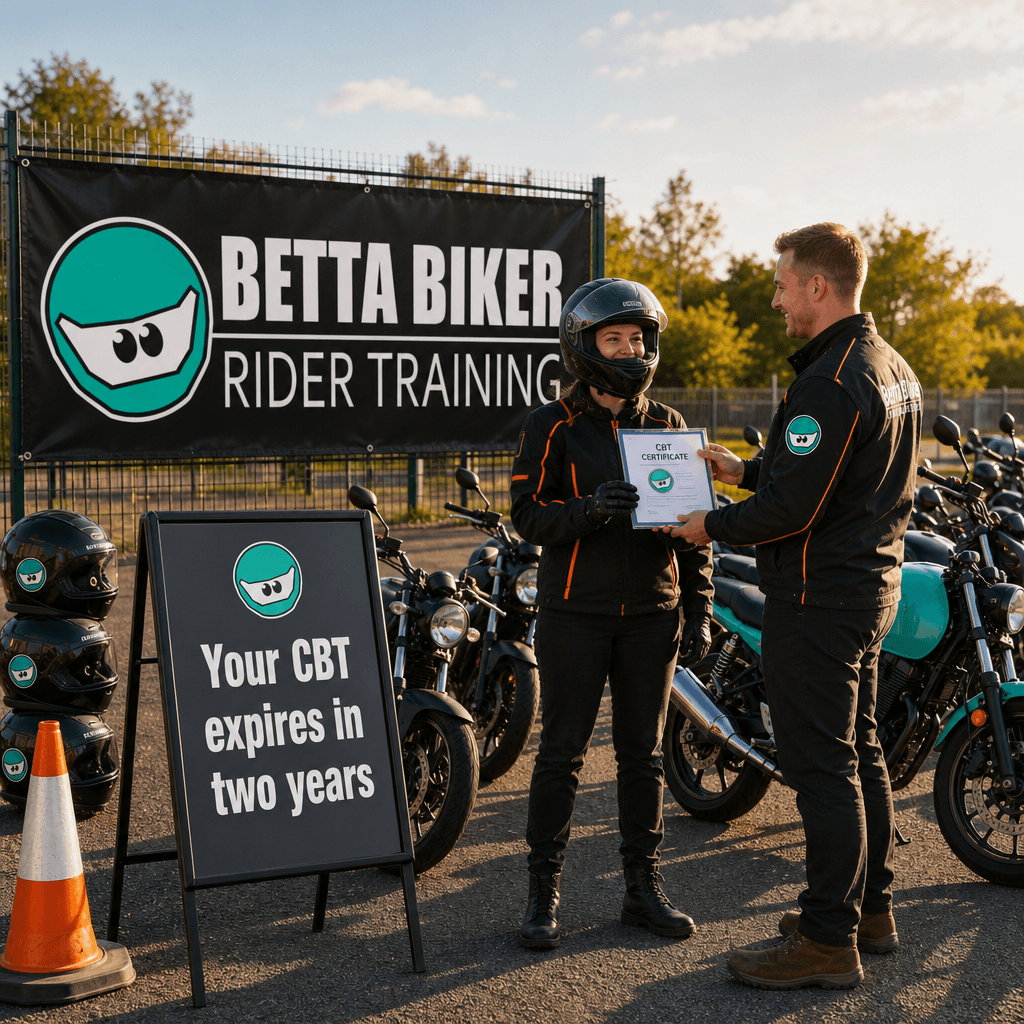
Your CBT certificate is only valid for two years. Miss that window and you’re back to square one, no riding on L-plates, no legal way out on the road until you retake the course.

That catches a lot of people out. Life gets busy, the bike sits in the garage, and suddenly the certificate’s out of date.

There’s no extension and no renewal process. Once it expires, you simply book and complete another CBT, same format as before: classroom instruction, practical training, and assessment.

At Betta Biker we run CBT courses at weekends, priced at £225. Whether it’s your first time or your second go after an expired certificate, small groups mean you get proper attention either way.

Worth checking now: when did you pass yours?

What 16 actually means for new riders (and parents)

At 16, your child can legally ride a 49cc moped on the road, and at 17 that stretches to 125cc, both with a valid CBT certificate.

That’s the bit most families don’t realise until they start looking into it properly. CBT isn’t a test you can fail outright. It’s a day of instruction, practical riding and honest assessment, built for people who have never sat on a bike before.

Small groups mean our instructors actually notice how each rider is doing, not just ticking boxes to get through the day. Nic’s been riding since 1976 and training riders since 2007, so he’s seen every kind of nervous first-timer come out the other side confident.

We supply the bike and the kit, so there’s nothing to buy before you turn up.

If your teenager’s asking about getting a moped for independence rather than convenience, what’s actually stopping you looking into it this autumn?

Not everyone passes CBT first time, and that’s fine

Nobody fails CBT the way you’d fail a driving test. There’s no pass or fail certificate at all, actually. It’s an assessment of whether you’re safe to ride on the road, and if an instructor doesn’t sign you off on a particular element, you simply need more time on that bit before you’re cleared.

The most common sticking points are usually the same: slow manoeuvres, U-turns, or road positioning on the on-road section. None of these are unusual for a complete beginner. That’s exactly why the course exists.

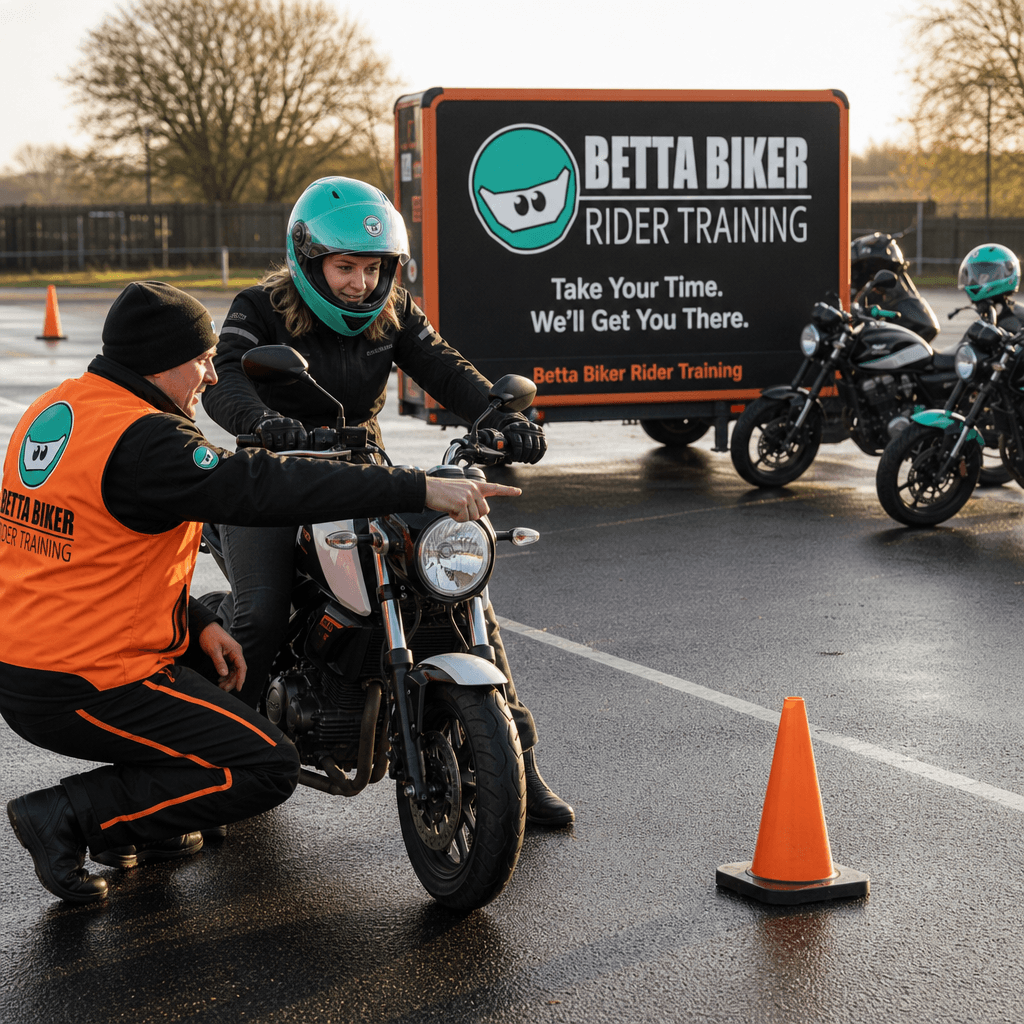
Our groups stay small so instructors like Nic and Daz can spot exactly where you’re struggling and work on it there and then, rather than you getting lost in a big class.

If you need extra time, we’d rather you take it than rush you through. Ever wondered what actually happens if you don’t get signed off on the day?

Give us a call on 07539 828073 and we’ll talk you through it.

Tuck in or sit up? Wind decides for you

Ever notice how tiring a motorway ride feels compared to back roads, even at the same speed? Wind resistance is doing more work on your body than most riders think about.

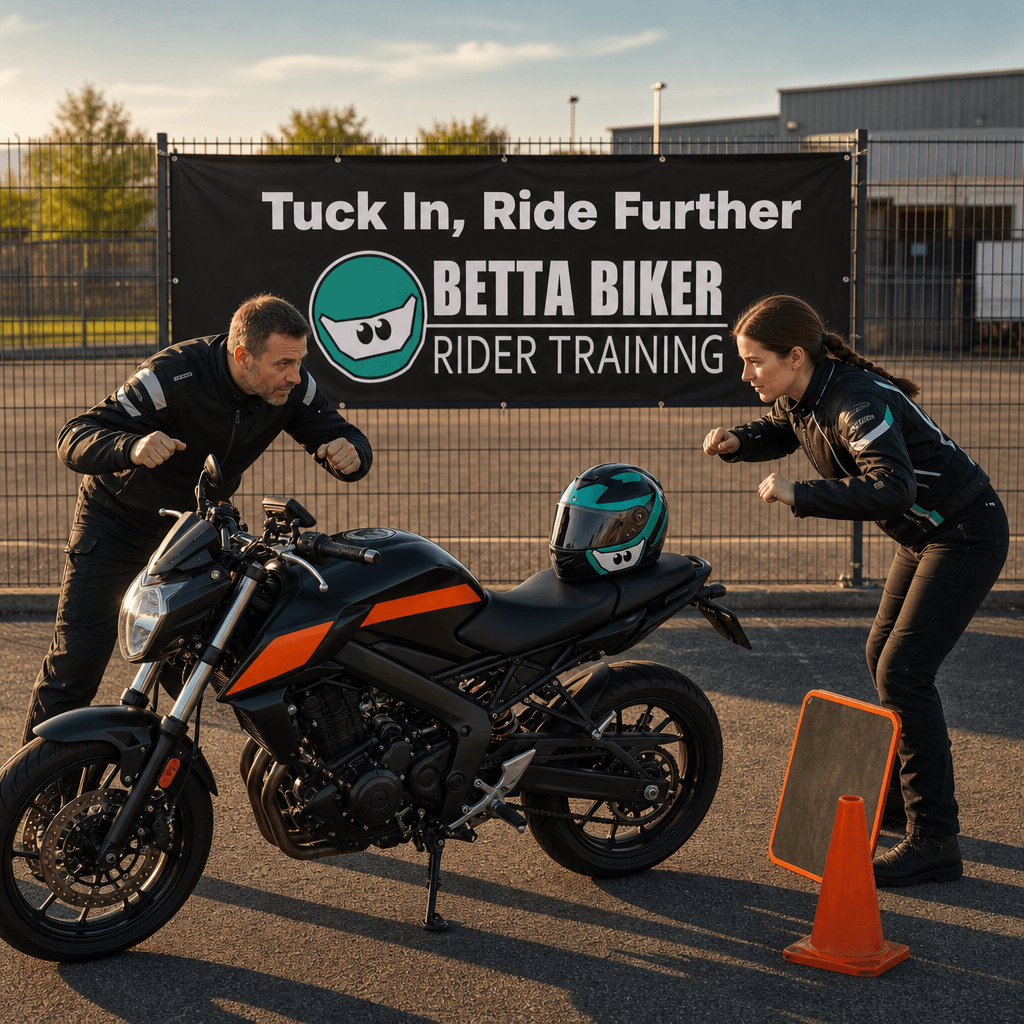
Sitting bolt upright turns you into a sail. Your chest and shoulders catch the air, which drags on your arms and wears out your grip a lot faster than it should.

Dropping slightly forward, elbows bent, shoulders relaxed, cuts that drag and gives you steadier control at speed. It also keeps your weight off your wrists, which helps on longer rides.

Crosswinds are a different problem entirely. A loose, ready posture with your knees gripping the tank lets you absorb a gust instead of fighting it.

We cover body position properly during CBT at Weaverham and Thatto Heath, because getting it right early makes every ride afterwards easier. What’s the windiest ride you’ve had to deal with so far?

Smoother throttle control starts with your wrist

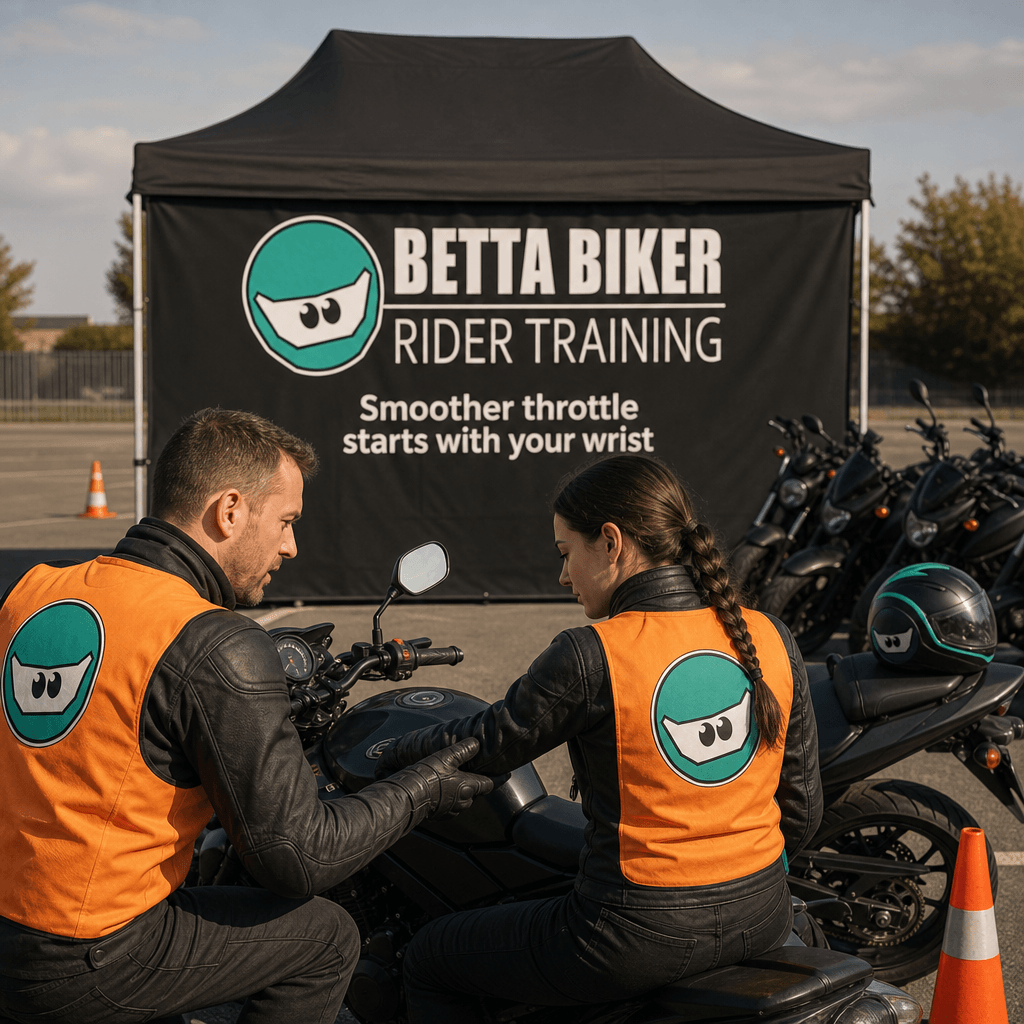
Snatchy throttle is the number one thing that makes new riders (and their pillions) feel sick or unsteady on a bike.

The fix isn’t more speed, it’s less panic. Roll the throttle on gradually rather than cracking it open, and the bike settles under you instead of lurching forward.

This is exactly the kind of thing we drum into people during CBT. You’ll spend real time in the training area practising smooth, progressive acceleration before you’re anywhere near a road.

A few things that help:

  • Keep your wrist relaxed, not gripping the throttle tight
  • Match your throttle input to your gear, not just your speed
  • Think “ease in, ease off” rather than on/off

Nic’s been riding since 1976 and still says the smoothest riders are the ones who stopped chasing speed and started thinking about control. What’s the one habit you had to unlearn when you started riding?

Sorted your CBT day, but what about your kit bag?

Passing your CBT is only half the job. Once you’re out riding on your own, a few basics in your tank bag or under the seat make a real difference.

A tyre pressure gauge takes seconds to use and can save you from a nasty surprise on a cold morning. Cheap, small, easy to forget.

A basic multi-tool or Allen key set covers most roadside fiddles, loose mirrors, adjusting levers, that sort of thing.

Don’t overlook a torch and some cable ties. Neither weighs anything, and both have got riders out of trouble more than once.

If you’re just starting out with us at Weaverham or Thatto Heath, we’ll cover the essentials during your CBT day, but it’s worth building your own kit as you go. What’s the one thing you never ride without?

Motorcycle Number Plates: UK Legal Display Rules

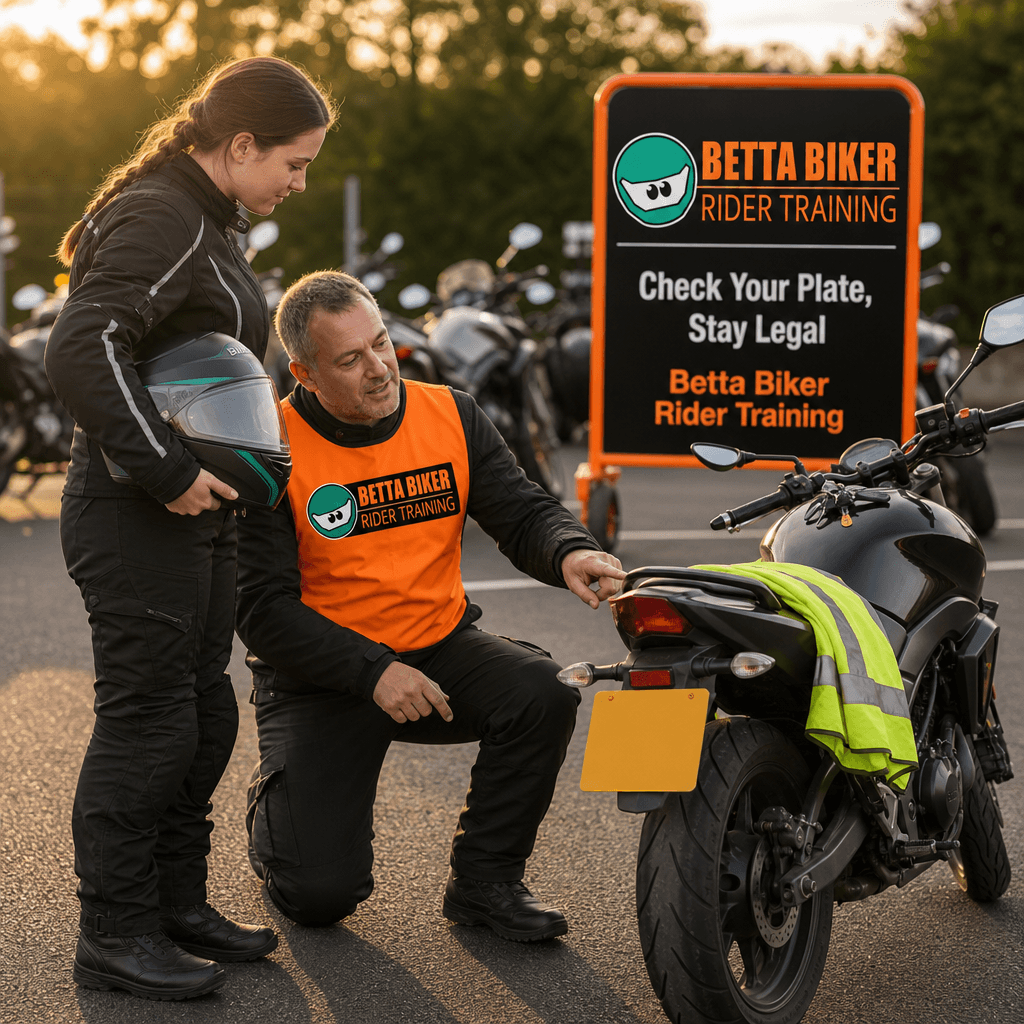
UK law requires every motorcycle to display a rear number plate that's clearly legible, correctly sized, properly lit at night, and unobstructed by mudguards, luggage, or exhaust smoke. Motorcycles only need a rear plate, not a front one. Get the format, size, or fixing wrong and you're risking a fine, points, or an MOT failure.

Do motorcycles need a front number plate?

No. Unlike cars, motorcycles registered in the UK only need to display a number plate on the rear. This applies to scooters, geared bikes, and mopeds alike. If you're used to cars, this trips a lot of new riders up when they're checking their bike over before a test or a ride out, so don't go looking for a front plate bracket that isn't supposed to be there.

What size and format must the plate follow?

Motorcycle plates use different dimensions to car plates because they're mounted in a smaller space. The registration must be displayed in the correct font (the standard Charles Wright typeface used across the UK), with the correct spacing between characters and groups. You can't stretch, squash, or reposition the characters to make a plate look "sportier" or to fit a tighter tail unit. Number plate suppliers producing plates for road use have to follow the British Standard for reflective plates, and any plate you buy for road use should confirm it meets that standard.

Plates that use unofficial fonts, italicised characters, or non-standard spacing are illegal to use on the road, even if they were sold to you as "show plates" or "display only." If a plate looks unusual, ask before you fit it.

Can I get a private or personalised plate for my motorcycle?

Yes. Motorcycles can carry personalised registrations the same as any other vehicle, as long as the plate still meets the legal format requirements above. A private plate doesn't give you licence to bend the font, spacing, or size rules. It just changes the combination of letters and numbers, not the presentation.

What are the lighting and visibility rules?

Your number plate has to be lit so it's readable at night, which is why every motorcycle has a small number plate light built into the rear light cluster. If that bulb's blown, your plate isn't legally displayed after dark, even if the plate itself is fine. It's worth checking this alongside your brake light and indicators when you do a walkaround before a ride.

The plate also needs to be kept clean and free from obstruction. Mud, a dragging mudguard, an oversized exhaust can, or a poorly positioned pannier or tail bag can all obscure the plate enough to cause a problem. Number plate angle matters too. It should sit close to vertical, not angled sharply down or to the side to "tuck it in," which is a common styling choice on modified bikes that often falls foul of the rules.

What happens if my number plate isn't compliant?

A non-compliant plate (wrong font, wrong size, poor lighting, obscured, or fitted at the wrong angle) can result in a fixed penalty notice, points on your licence, or an MOT failure once your bike is old enough to require one. Police can also stop you and ask you to correct the issue immediately. None of this is complicated to avoid: it comes down to buying a plate from a legitimate supplier and checking it regularly, the same way you'd check your tyres or your chain.

Why does this matter more for new riders?

If you're working towards your CBT or a full licence, you might not own your own bike yet, but the plate rules still matter because they're part of understanding what "roadworthy and legal" actually means. Examiners and instructors expect you to know the basics of what makes a bike legal to ride, not just how to operate the controls. It's the same mindset we build into our CBT courses at Betta Biker: we're not just teaching you to balance and change gear, we're developing what we call "thinking" riders, people who understand the reasoning behind the rules rather than just following them by rote.

Common questions about motorcycle number plates

Do I need a front number plate on my motorbike?
No. UK motorcycles only require a rear number plate. This is different from cars, which need one at the front and back.

Can I fit a show plate to my motorcycle for road use?
No. Show plates and novelty plates that don't follow the standard font, spacing, and size rules are illegal for road use, regardless of how they're marketed when sold.

Will a dirty or obscured plate fail my MOT?
Yes. A plate that's illegible due to dirt, damage, poor lighting, or obstruction from mudguards or luggage can cause an MOT failure and can also result in a roadside penalty.

Does a personalised plate need to follow the same rules as a standard one?
Yes. Personalised or private registrations still have to use the correct font, spacing, and size. Only the character combination changes.

Get properly trained before you worry about the details

Knowing your number plate rules is useful, but it's one small piece of what makes someone a safe, legal rider. If you're just starting out, our CBT courses at Weaverham, Thatto Heath, Tatton Dale, and Newburgh cover the practical riding skills and the legal knowledge you need in one day, for £190, with small group sizes and all bikes and kit provided. Whether you're 16 and starting on a 49cc, 17 and moving to a 125cc, or working towards your full licence with a DAS course, our instructors, led by Chief Instructor Nic Garner, focus on building riders who understand the "why" behind the rules, not just the motions.

Head to www.bettabiker.co.uk to check course dates and book your CBT, or give us a call on 07539 828073 to talk through which course fits where you're at.


Terms and Conditions